




Written by Rissa Hanneken, former 3rd-5th grade teacher, instructional coach, and new teacher mentor with 19 years of experience in Florida classrooms, and the creator of Teaching in the Heart of Florida. Rissa creates no-prep reading, math, and emergency sub plan resources for upper elementary teachers, built on real classroom experience. Her resources are purposeful, manageable, and ready when you need them most.
After seven years of in 3rd grade, I can tell you without hesitation that a back to school math review for 3rd grade is worth every single minute of the first week or two. I have never once wished I had skipped it.
Teaching 3rd grade comes with a lot of pressure to move fast and cover everything. Review can feel like a luxury you cannot afford. But in my experience, it is actually the opposite.
Think about it. Most of your new third graders have not touched a math problem since May. Some of them spent the summer at camp, on vacation, or just being kids. Honestly? Good for them. But that means the place-value, addition, subtraction, telling time, and counting-money skills they worked so hard to build in 2nd grade? A little rusty.
That first week of review gives your students the warm-up time they need to shake off the summer and feel confident again before you ask them to tackle something brand new. And while they are warming up, you are doing something just as valuable. You are watching. You are noticing who breezes through regrouping and who quietly struggles. You are getting a real picture of where each student is before you ever introduce a 3rd grade standard.
That is not busy work. That is smart teaching.
So if you have ever felt guilty about not diving straight into your curriculum on day one, I hope this gives you permission to let that go. A back to school math review for 3rd grade is not time lost. It is time invested, and your students will be better for it all year long.
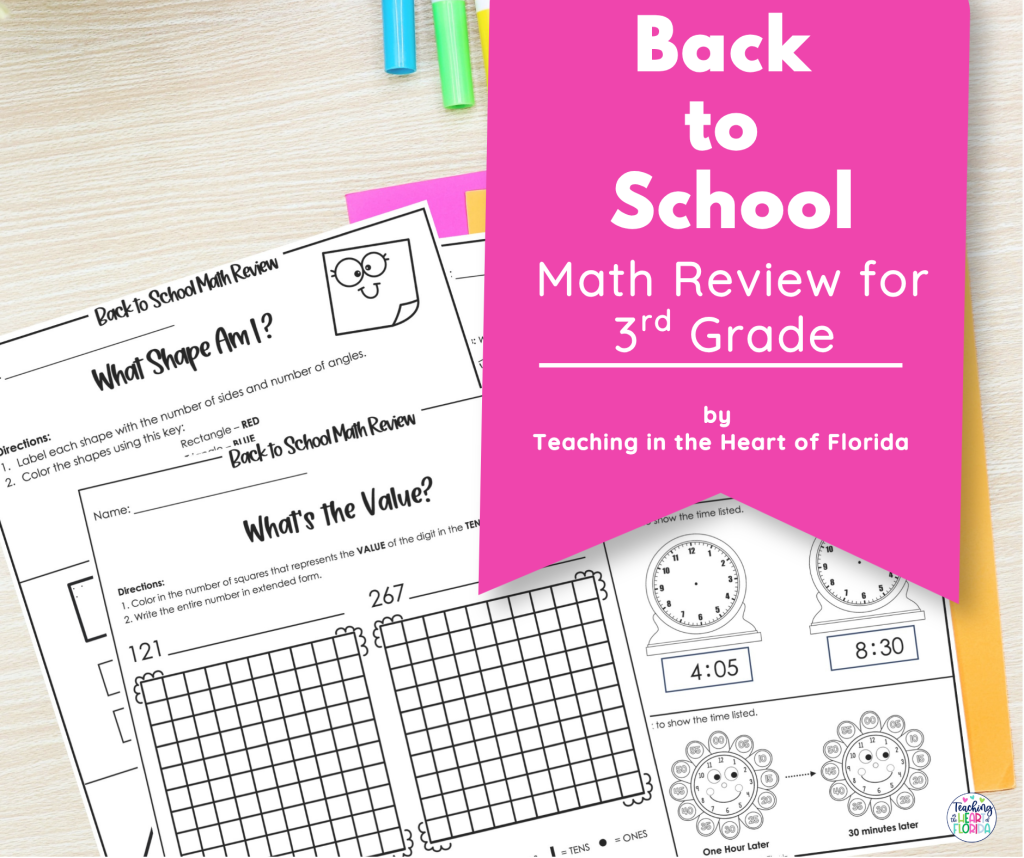
Two Reasons to Do a Math Review the First Week of 3rd Grade
Reason 1: Summer is real, and so is summer slide.
Think about what your new third graders are walking in with after ten weeks away from school. For most of them, summer meant no math, no reading logs, and absolutely no one asking them to regroup. Their brains are not broken, they just need a little time to wake back up.
Research from NWEA confirms that test scores tend to drop more in math than in any other subject over the summer, and that drop becomes more pronounced as students move into higher grade levels. In other words, your incoming third graders are likely walking in with more math loss than the year before. That is not a reason to panic. It is a reason to plan.
Starting with a review of 2nd grade skills gives students a gentle on-ramp back into learning. Instead of hitting a wall on day two because the content is unfamiliar, they get to experience some early wins. They remember things they thought they forgot. Their confidence comes back. By the time you introduce your first 3rd grade standard, they are warmed up, settled in, and actually ready to learn something new.
Reason 2: You need data before you start anything new.
Here is the part that changed how I planned my entire first unit. When students are working through review activities, you are not just keeping them busy. You are watching. You are noticing who still has a solid handle on place value and who is counting on their fingers to add two-digit numbers. You are finding out who needs a little extra support before you ever teach a new concept.
That information is incredibly valuable. It helps you plan small groups, adjust your pacing, and make sure no student gets left behind simply because they came in with a gap you did not know about. A back to school math review gives you a real picture of where your class is, and that picture is worth every minute you spend on it.
Back to School Math Review: Review or Diagnostic?
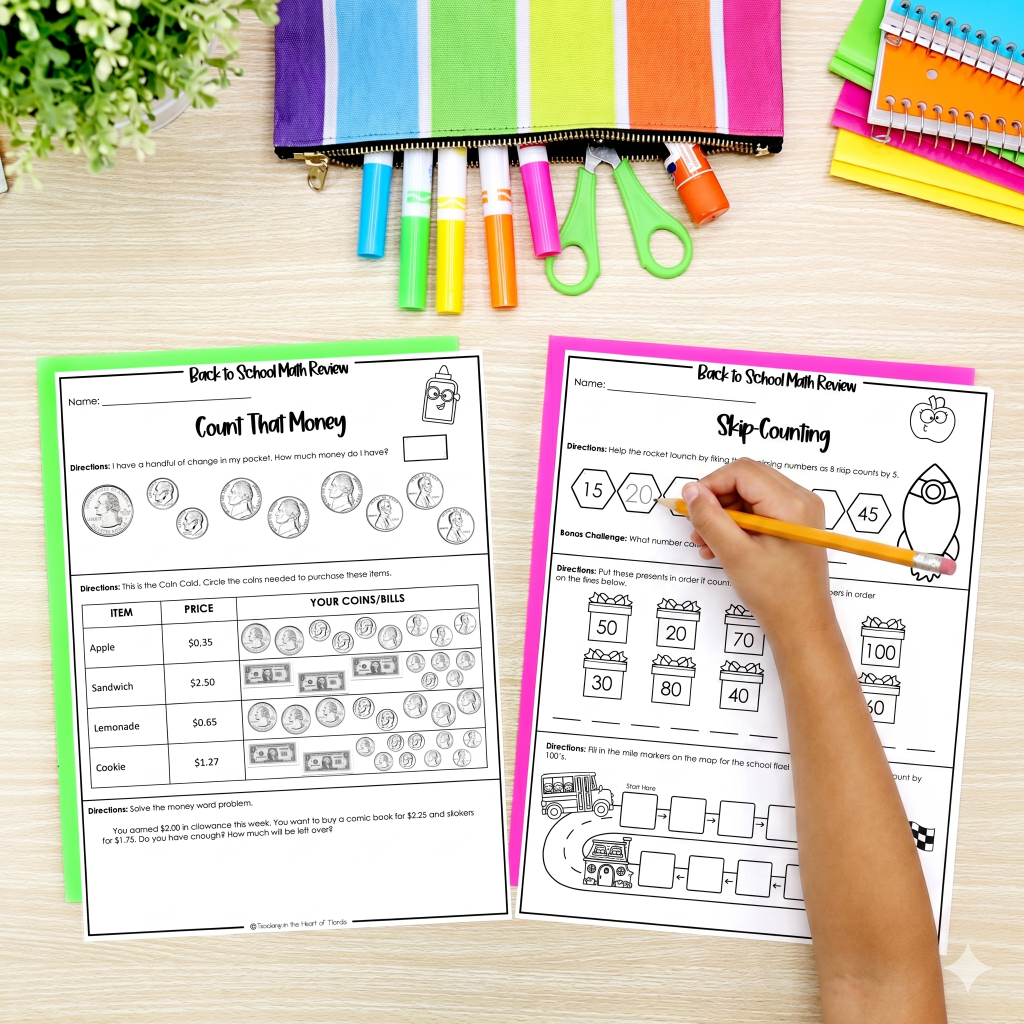
If you are looking at this resource and wondering whether it is a review activity or a diagnostic assessment, the answer is honestly both. That is exactly what makes it so useful in the first weeks of school.
The activities are designed to feel approachable. Students are not sitting down to a formal test with a timer running and a grade on the line. They are working through familiar skills in a low-pressure setting, which means even your students who are still firmly in summer mode can ease in without shutting down. There are no high stakes, no anxiety, just a chance to shake off the rust and remember what they already know.
At the same time, you are getting real information. As your students work, you are noticing patterns. Who flies through the place value section and who hesitates? Who can solve an addition word problem independently and who needs to reread it three times? That is formative data, and it is the kind that actually helps you plan, without ever having to put your students in a stressful test-taking environment to get it.
The best part is that you do not have to choose between making the first week feel warm and welcoming and getting the information you need to teach well.
Think of it less like a test and more like a warm-up lap. Students shake off the summer rust, and you get a clear look at who is ready to run.
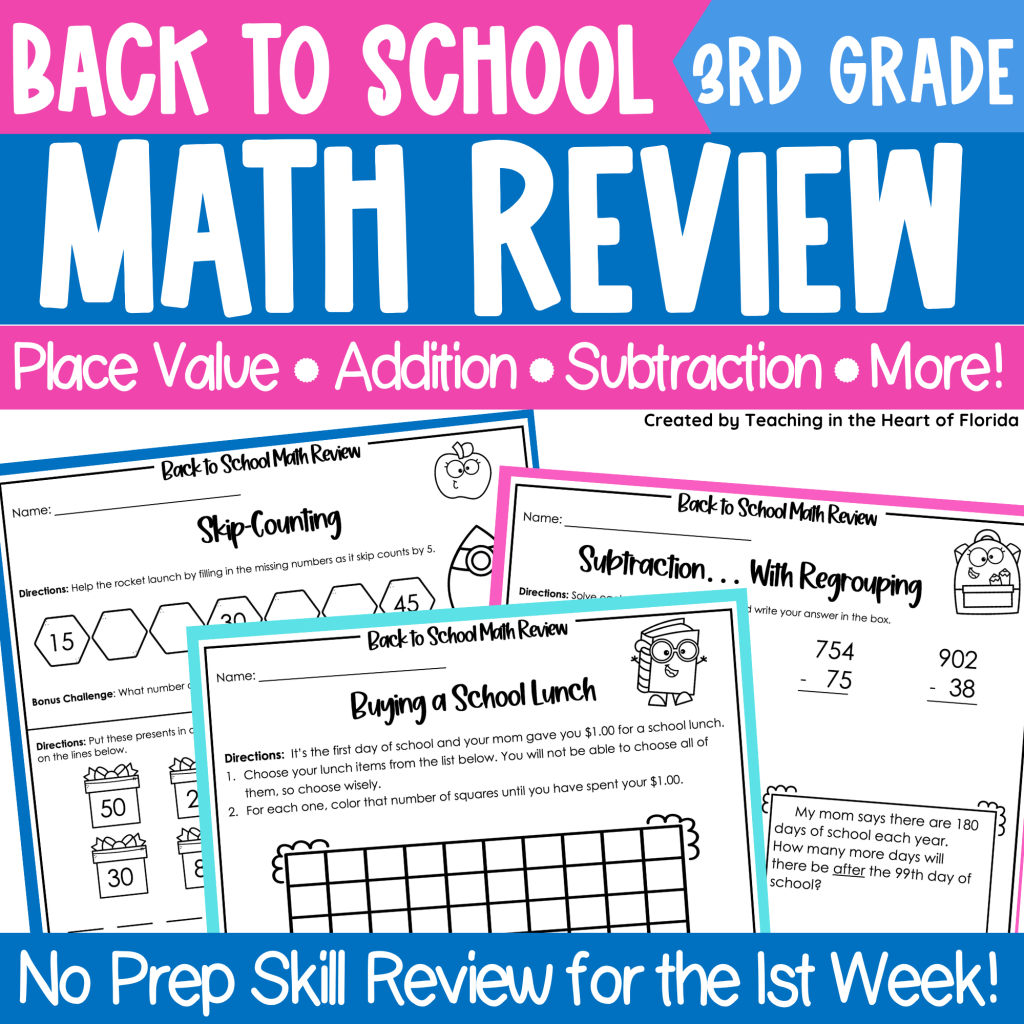
What Is Included in This Back to School Math Review for 3rd Grade
Numbers and Operations in Base Ten
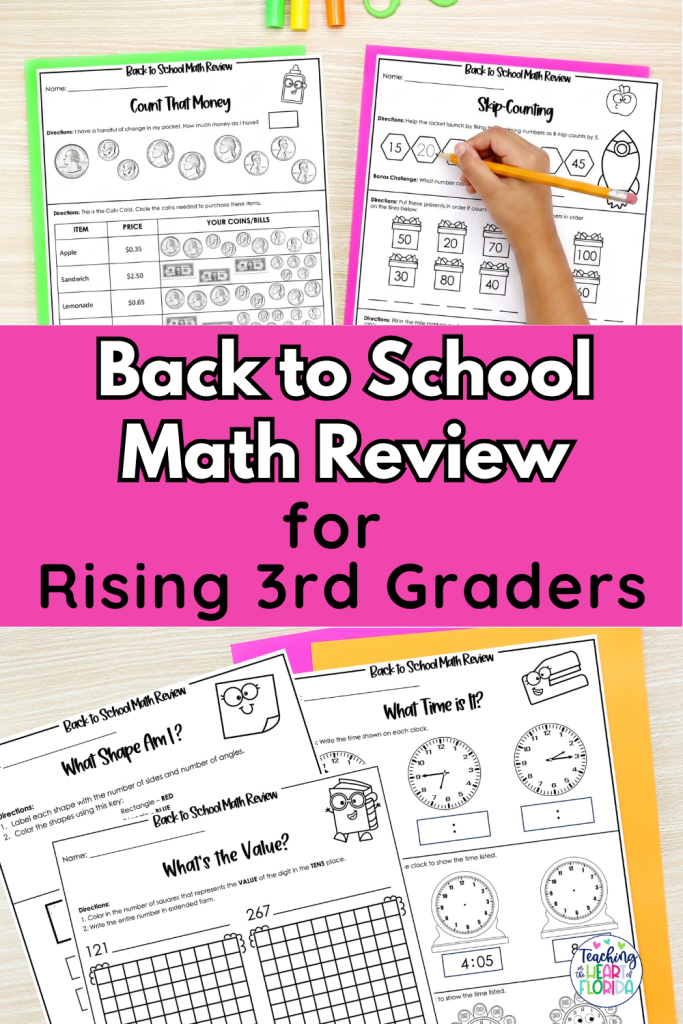
- What’s the Value? Students identify place value. You learn who has a solid foundation and who is still struggling
- Greater Than or Less? Comparing Numbers. A quick window into overall number sense.
- 10 More, 10 Less, 100 More, 100 Less: Mental math that tells you a lot about how flexible a student is with numbers
- Skip Counting: Foundational for multiplication. Flag any students who struggle here early.
- Adding 2 and 3 Digit Numbers (with and without regrouping, includes word problems): Both computation and reading comprehension in one.
- Subtracting 2 and 3 Digit Numbers (with and without regrouping, includes word problems): You can see who gets regrouping and who is still struggling.
Operations and Algebraic Thinking
- Addition Spiral: Describe the format briefly so the reader can picture it. Keeps students moving through facts in a structured way.
- Buying a School Lunch: A real-world money and addition scenario. Students stay engaged because the context feels familiar.
Geometry
- What Shape Am I?: Students identify shapes from descriptions or attributes.
Measurement
- Let’s Measure Our School Supplies: Rulers come out in the first week. Students love it, and you get useful data!
- Count That Money: Coins and bills. You will be surprised how many students need a refresher here.
- What Time Is It?: Telling time to the nearest five minutes. They need this skill to be ready to learn about elapsed time in 3rd grade.
How I Used This as a Formative Assessment (Not Just Busy Work)
Here is how I used this resource:
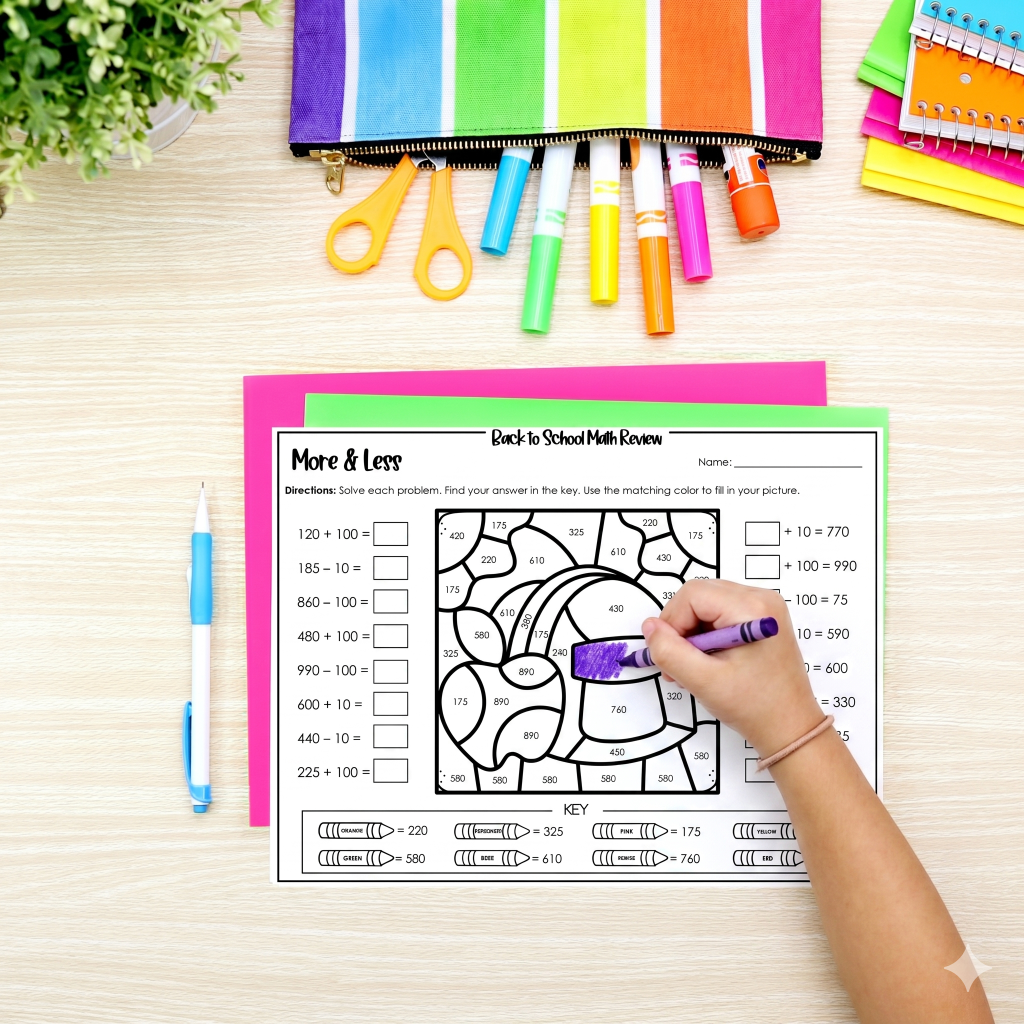
I did not grade it for a score. My students worked through it like it counted, which is exactly what I needed. But on my end, I was not sitting down with a red pen to mark right and wrong answers. I was looking for patterns across the whole class.
I looked for class-wide patterns, not just individual errors. Were most of my students struggling with regrouping, or just a few? Was skip counting a problem across the board, or did it only trip up certain kids? Those patterns told me what to address whole group, what to save for small groups, and where to slow down before introducing anything new.
I used it to identify students who needed intervention right away. Not in October. Not after the first unit test. Right away, before we ever opened the 3rd grade curriculum. Every year, those first few days of review helped me find two or three students who needed extra support immediately. That early identification made a real difference.
I used the data to plan my first small group sessions. Instead of guessing who needed help with what, I already knew. I walked into week two with a plan.
I watched body language as much as I watched their papers. A student who puts their pencil down and stares at the ceiling during the subtraction with regrouping section is telling you something, even if they never write a single answer. Frustration, avoidance, and shutting down are all data points too.
Tips for Using This Back to School Math Review for 3rd Grade
- Start with the hands-on sections like measuring school supplies or counting money. Students who are in summer brain mode respond better to concrete, tactile tasks before moving into computation.
- Use it across multiple days rather than all at once.
- Do not time it. The goal is reactivation, not performance. Let students work at a pace that feels manageable in the first week.
- Let students use manipulatives if needed. You are assessing understanding, not testing conditions.
- Pair it with a simple tracking sheet to note patterns across the class.
Who This Back to School Math Review Resource Is Designed For
This resource was designed with 3rd grade classroom teachers in mind, but honestly, it works well for anyone who needs a clear picture of where students are with 2nd grade math skills before moving forward.
It works especially well for teachers who are starting a brand new school year and want a structured way to ease students back into math without throwing them straight into 3rd grade content. If you have ever stood in front of your class on the first day and wondered what your students actually remember from last year, this is the resource that answers that question.
It is also a great fit if you looped up from 2nd grade with your students and want a formal tool to document where they are at the start of a new year. Even if you know your students well, having that written record is valuable.
Math interventionists and instructional coaches will find it useful too, especially for identifying students who may need additional support before 3rd grade standards are introduced. Getting ahead of those gaps in the first week is so much easier than trying to close them in November.
If you teach in a school where summer slide is a real concern for your students, this review offers a practical, low-prep way to address it head-on. No elaborate setup required. Just print, hand it out, and start gathering information from day one.
How to Use This Review During the First Two Weeks of School
The first two weeks of school are a little different from every other week of the year. You are still learning names, building routines, and figuring out the personalities in your room. The good news is that this review fits right into that getting-to-know-you season without adding stress for you or your students.
Here are a few ways to use it during those first weeks:
Spread it out over several days. You do not need to do this all at once. Pull out one or two sections per day during your math block and let students work at a comfortable pace. This keeps the first week feeling manageable for everyone.
Use it as a math center. If you are already setting up center rotations in the first week, individual sections of this review work perfectly as an independent center activity while you pull small groups or meet with students one on one.
Try a whole group read-aloud for the word problems. For students you do not know yet, reading the word problems aloud together removes the barrier of decoding and lets you see who understands the math concept itself. It is also a low-key way to start building classroom community on day one.
Use the hands-on sections as icebreakers. The measurement and money sections are great for partner work. Pairing students up to measure school supplies or count coins together gives you a chance to observe how they communicate, collaborate, and problem solve, all while gathering math data at the same time.
If you want to skip the guesswork and walk into your first week of 3rd grade math with a real picture of where your students are, this resource is ready for you. Just print, use, and let the data do the talking.

More Posts You Might Like
First Week of School Activities for 3rd Grade The first week of 3rd grade is a big deal for your students and for you. If you are looking for an activity that builds community, teaches classroom expectations, and actually keeps your new third graders engaged all at the same time, this post is for you. Spoiler: it involves a mystery, a safari hat, and a missing survival guide.
Math Game Shows: The Perfect Way to Kick Off Back to School Once your students have shaken off the summer rust with their math review, a game show is the perfect next step. This post walks you through how to use math game shows to review skills, build classroom community, and make your students actually look forward to math class. There is also a free game show inside, so it is worth the click.