





By Rissa Hanneken, Updated April 11, 2026
Using a character traits anchor chart for 4th grade reading is one of my favorite ways to introduce this skill. The reader in me loves watching students dig into a character’s thoughts, actions, and words and make connections that are completely their own. Fourth graders are ready for that deeper thinking, and it shows every time.

Table of Contents
Why Character Traits Matter in 4th Grade Reading
Understanding character traits is a foundational reading skill that goes well beyond identifying whether a character is kind or brave. In 4th grade, students are expected to analyze how a character’s traits drive the plot forward and influence the events of the story. This directly supports Common Core standard RL.4.3, which asks students to describe a character in depth, drawing on specific details from the text including their thoughts, words, and actions.
When students can identify and analyze character traits with confidence, their written responses become stronger, their text dependent answers become more specific, and their overall comprehension deepens. Teaching this skill well in 4th grade builds the foundation for the more complex character analysis students will encounter in 5th grade and beyond.

Why Students Struggle with Character Traits
Before starting the teaching sequence, it helps to understand where students typically get stuck. Most 4th graders can identify a character trait when given a word bank. The real struggle comes when they are asked to do two harder things. First, identifying traits independently using only the text. Second, supporting their answer with specific evidence rather than a general feeling about the character.
This is exactly why starting with an anchor chart is so effective. It gives students a clear visual framework for collecting evidence before they are asked to draw any conclusions. Instead of guessing at a trait and working backwards, they gather the character’s thoughts, actions, and words first, and let the trait emerge from the evidence naturally.
What Goes On Each Anchor Chart
The first anchor chart focuses on how to interpret details about a character. It includes three columns for recording the character’s thoughts, actions, and words directly from the text. Students use this chart to gather raw evidence before drawing any conclusions about the character’s traits. Having a visual organizer for this step prevents the most common mistake, which is making a general statement about a character without grounding it in the text.
The second anchor chart focuses on how to make a statement about a character using the collected evidence. It walks students through the process of looking at their collected details and identifying the trait or traits that connect them. It also includes a sentence frame for writing a character traits statement, which gives students the language they need to express their thinking in a clear and structured way.
Together these two anchor charts create a complete thinking sequence. The first one builds the evidence. The second one builds the argument.
Here is exactly how I introduce both anchor charts using the I Do, We Do, You Do sequence of instruction.
In the case of this skill – there are two that I use:
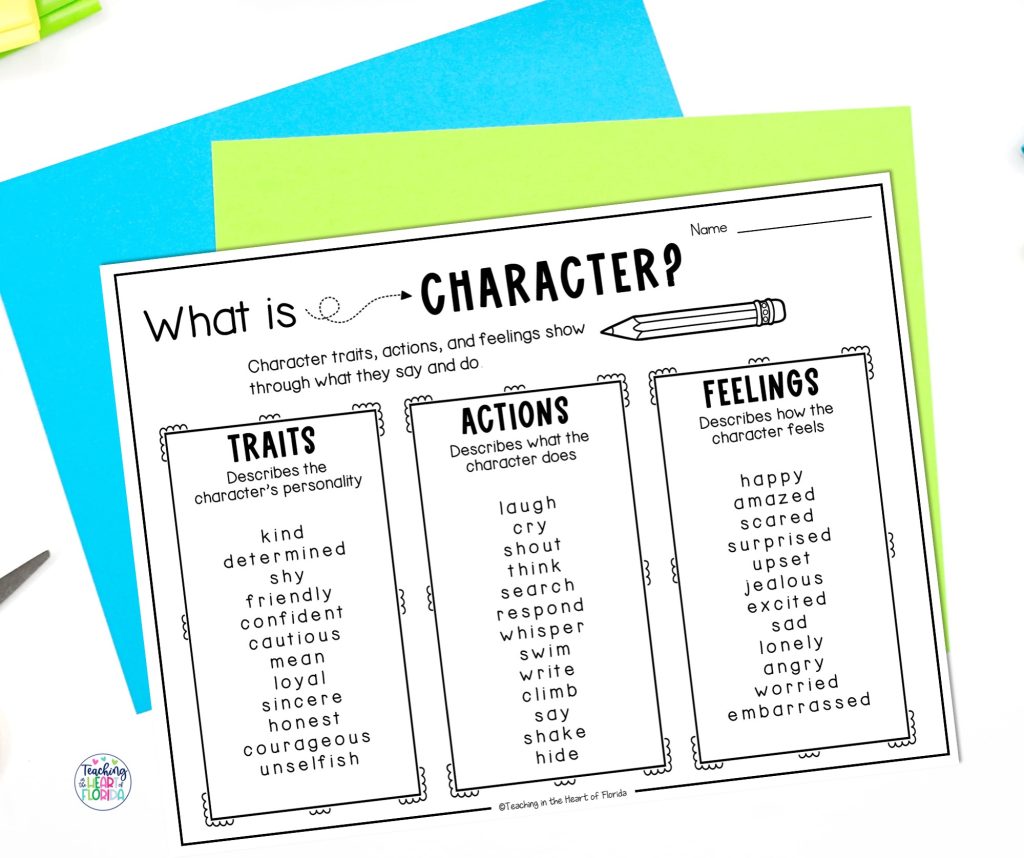

The Character Traits Anchor Chart Lesson
1. Constructing the anchor chart is the lesson. The first time you introduce this skill, do not rush past the anchor chart to get to the activity. Building it together with students is the instruction. Take your time.
2. I DO: Model with a picture book. I use “A Bad Case of Stripes” because the character’s traits are vivid and easy to identify. Read aloud and think out loud as you fill in the anchor chart, showing students exactly how you move from details to traits.
3. WE DO: Invite students to participate. The next day students jot down the character’s thoughts, actions, and words as you read. They add their notes to the chart using post-its, which keeps everyone accountable and makes the thinking visible.
4. WE DO: Discussion. We discuss the traits and write a statement about the character using the steps from the How to Interpret Details from the Text Anchor Chart
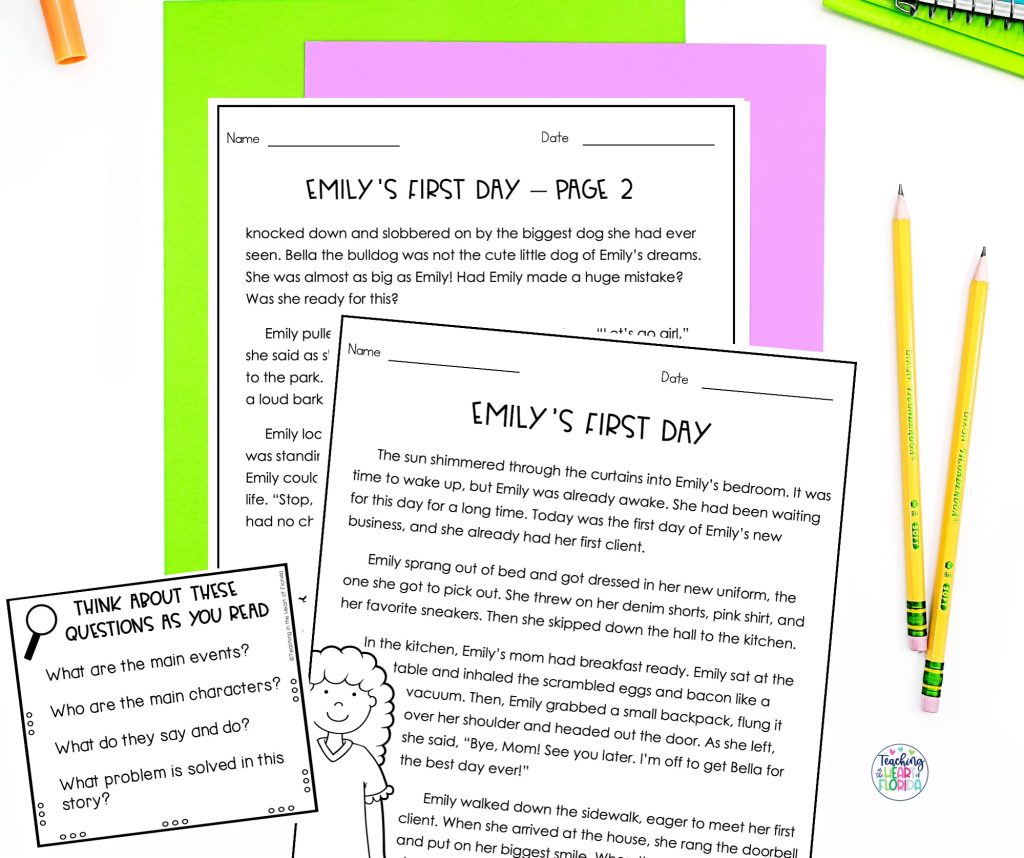
5. YOU DO: When students are ready, I want them to read a text closely, take notes about the character, and create their anchor chart. Giving them guiding questions (like those below) helps with this!
6. YOU DO: After they have read the text one time, I also want them to map out the story plot. This helps them analyze the character even more deeply. (SEE BELOW)
Responding to Text Dependent Questions About Character Traits
Before students respond to text-dependent questions, I want them to reread the text a 2nd time. Their comprehension of the text will deepen on the 2nd reading. Their ability to respond to the questions will also increase.
They can add details to their anchor charts and story plot map at this time.

Making a Statement About the Character
7. YOU DO: I want students to use their collected information to make a statement about the character within the story plot. Using a sentence frame to summarize the text is very helpful, especially at the beginning of their practice. (If you are working on citing text evidence, this post can give some helpful guidance!)
What Makes This Lesson So Effective?
This lesson works because it breaks a complex skill into manageable steps and gives students a visible thinking process to follow. Instead of asking 4th graders to jump straight to identifying a character trait, they build their understanding piece by piece. First they collect evidence. Then they interpret it. Then they write about it.
Each tool in this lesson serves a specific purpose. The anchor chart makes the thinking visible. The guiding questions keep students focused on the right details. The text dependent questions push them to go back to the text rather than relying on memory. The sentence frame gives them the language to express their thinking clearly without getting stuck on how to start.
When every part of the lesson has a clear purpose, students feel supported rather than overwhelmed, and that is when the real learning happens.
Grab This FREE Reading Resource!

What Happens Now?
Once students have worked through this sequence, they have a clear and repeatable process for analyzing a character. They stop guessing at character traits and start using evidence from the text to support their thinking. Their written responses become more specific and their text dependent answers become more grounded in what the author actually wrote.
At this point you can move students into independent practice with confidence. They have the anchor charts as a reference, the guiding questions to keep them focused, and a sentence frame to structure their thinking. Everything they need to work independently is already in place.
When you are ready to take this skill further, my Character Traits Close Reading Packet for 4th Grade includes all of these resources in one print and go package, saving you hours of lesson planning.
Frequently Asked Questions
How long does this lesson take to complete?
This lesson is designed to unfold over several days rather than one sitting. Plan for one day to build the anchor charts together during the I Do phase, one day for the We Do practice with a picture book, and then additional days for independent practice depending on your students.
What if my students are not ready to work independently after the We Do phase?
That is completely normal. Some students need more time in the We Do phase before they are ready to work on their own. Simply repeat the We Do experience with a different picture book or a short text before moving to independent practice. The anchor charts stay visible throughout, so students always have a reference point when they get stuck. Small group time is also a great place to give extra support to students who need more scaffolding before working independently.
Can I use this lesson with any book or does it have to be a picture book?
The lesson works with any text. Picture books are recommended for the I Do phase because they are short enough to read in one sitting and the character traits are usually easy to identify, which makes modeling cleaner. Once students understand the process, you can move into chapter books, short stories, or any text you are already using in your classroom. The anchor charts and guiding questions work the same way regardless of the text.
Ready to teach character traits?

Teaching character traits does not have to drag on for weeks. With two anchor charts, clear steps, and guided practice built right in, your students can move from confusion to confidence faster than you think. Grab my Character Traits Close Reading Packet for 4th Grade and save yourself hours of lesson planning. Get the resource here.
You Might Also Like:
About the Author

Hi, I’m Rissa, a former upper elementary teacher and now a full-time curriculum creator. I design clear and focused, high-impact resources for 3rd–5th grade teachers who want to save time and feel confident in what they’re teaching. I’ve spent years creating reading, math, and social studies lessons that are purposeful, manageable, and ready when you need them most.