




By Rissa Hanneken, Updated April 9, 2026
The key to teaching theme in 4th grade is starting with what students already notice. Guide them through the characters, big ideas, and plot, then help them see how those pieces connect into a life lesson.
I remember teaching theme in 4th grade for the first time and realizing my students were great at retelling the story, but not so great at explaining what it meant. Their summaries sounded like a sports broadcast: this happened, then that happened. Once I showed them how to pick out the bigger ideas, they started connecting the dots to the theme.
One big part of that shift was teaching them how to back up their ideas with text evidence. Without it, they’d guess at the theme instead of proving it. (If you’re working on that skill too, here’s a step-by-step post on teaching students to cite text evidence).
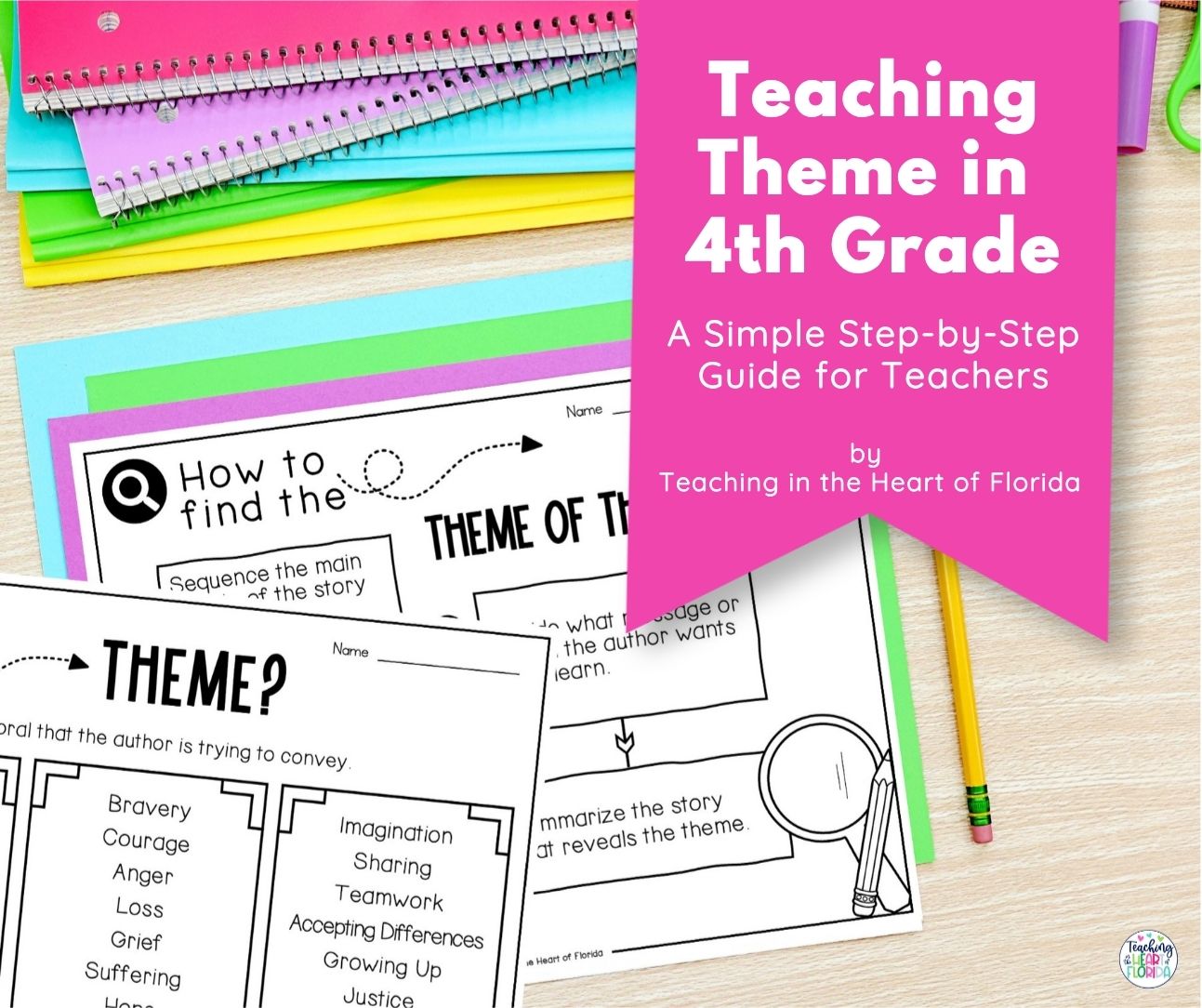
Table of Contents
Grab This FREE Reading Resource!

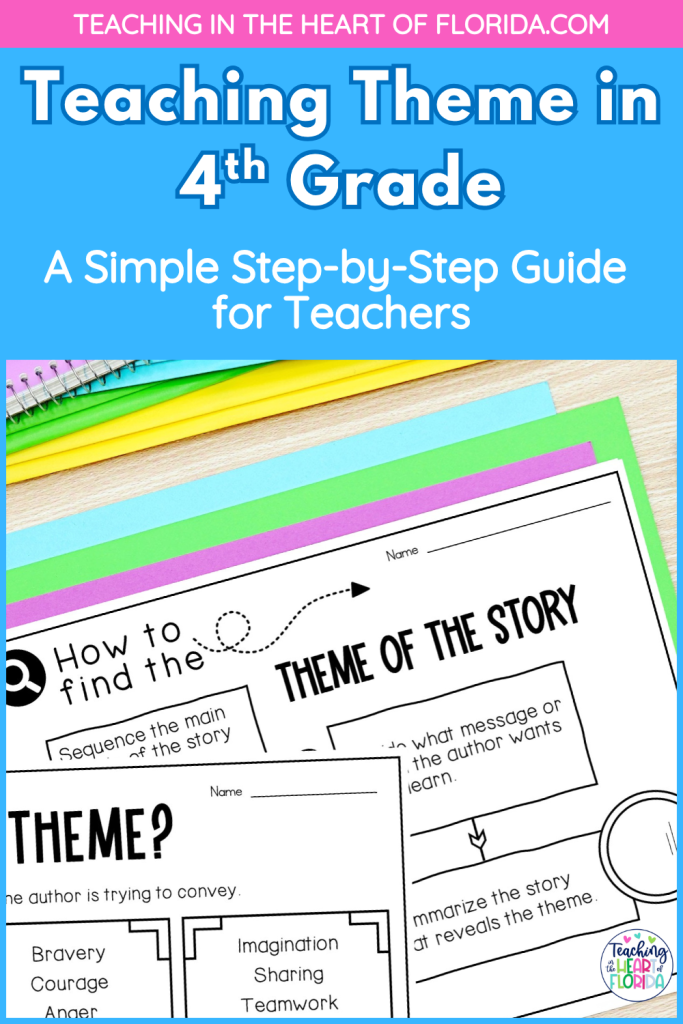
What is the theme of the story for fourth graders?

The theme of the story is the lesson or message the author wants readers to take away. It’s bigger than the events of the plot—it’s about what those events mean. For example, in A Bad Case of Stripes, the theme is about peer pressure and fitting in. In Because of Winn-Dixie, the theme centers on friendship and forgiveness.
Kids often confuse theme with the main idea, so it helps to show them clear examples and keep an anchor chart of common themes handy. Teachers can also lean on strategies like modeling, questioning, and guided discussion. These are methods that reading experts recommend when teaching deeper comprehension skills (see this Edutopia article on teaching reading comprehension for more).
This theme anchor chart lists examples that can be very helpful when trying to teach theme of the story to 4th graders.

How do you teach theme step-by-step?
The best way to teach 4th graders how to find the theme is to break it into clear, repeatable steps. When students know what to look for, theme doesn’t feel like guesswork anymore.
Here are four steps I use with my students:
- Look at the important events in the plot.
What happened in the beginning, middle, and end that really changed the character or moved the story forward? - Identify the big ideas.
These are the lessons or topics that keep popping up—things like friendship, honesty, or bravery. - Think about the characters.
What challenges did they face? How did they change? Their journey usually points you toward the theme. - Write a short summary that includes the theme.
A summary that just retells the plot isn’t enough. Students need to end with the “so what”—the bigger message of the story.
When I modeled these steps on the board, my students started catching on quickly. They could see how the big ideas connected to the plot, and it gave them a process they could follow every time we read. Pairing these steps with an anchor chart or graphic organizer made it even easier for them to keep track of their thinking.d to model. Students will need several attempts at discovering the big ideas to really understand the concept.
Activities To Teach Theme in 4th Grade
One of the most effective ways to teach theme is through close reading strategies. Breaking the lesson into a first read and second read helps students focus on different layers of the text without feeling overwhelmed.
First Read: Getting the Gist
During the first read, I ask students to:

- Get the overall gist of the story.
- Jot down details they think are important in the margins or on sticky notes.
- Identify the main character and list a few key traits.
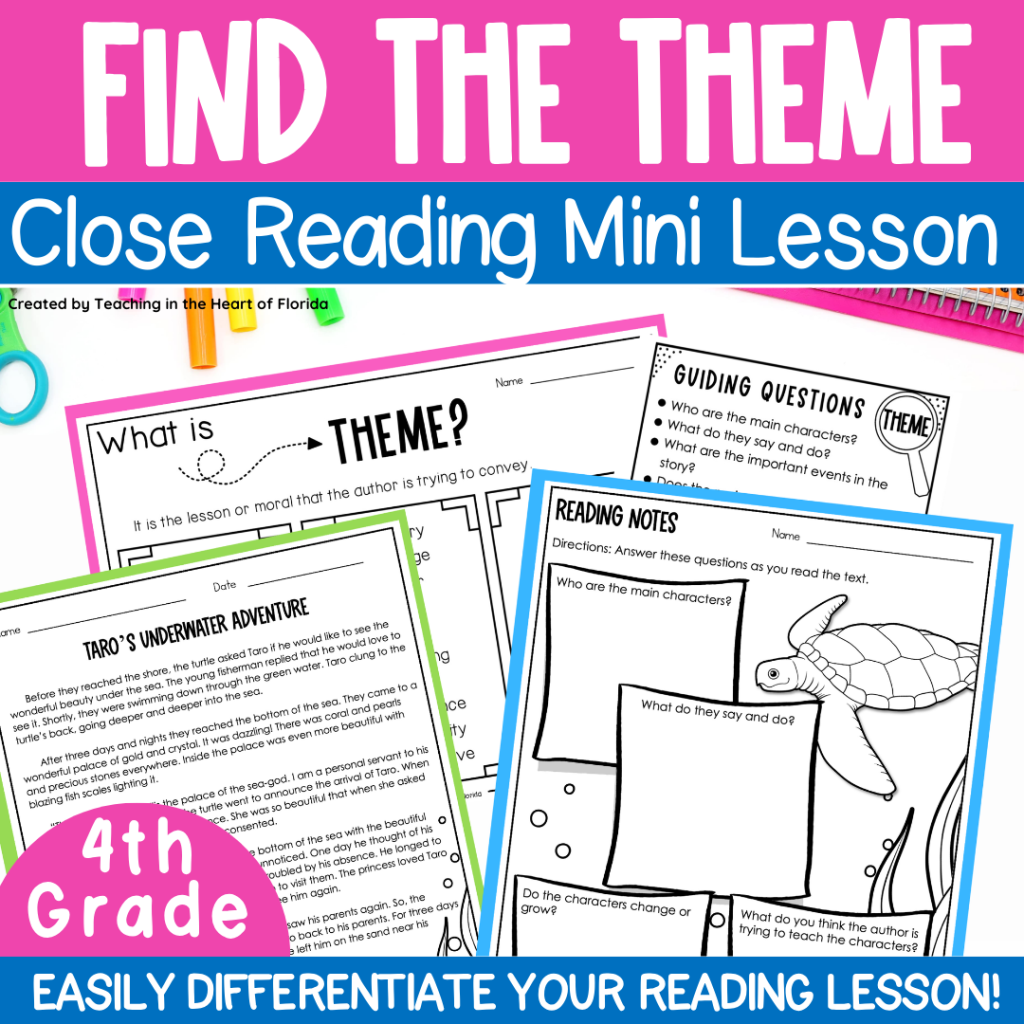
To guide them, I use prompting questions and a simple Reading Notes Activity they can fill in right after reading. This keeps them from drifting into a retell and helps them notice what stands out.
Second Read: Digging Deeper
The second time through, the focus shifts to uncovering the big ideas that will lead to the theme. Students will:
- Reread with fresh eyes, adding margin notes as needed.
- Complete a story plot map to organize the key events.
- Use the plot map to spot common threads or lessons running through the story.
By the end of the second read, students can compare the “big ideas” they found in each part of the story. That overlap is where the theme usually becomes clear.
One teacher told me her students finally stopped confusing theme with main idea after using the plot map. She said it gave them a process to follow instead of just guessing.
If you’d like ready-to-use Reading Notes and Plot Map organizers, they’re included in my Theme Resource for 4th Grade. It’s no-prep and walks students through every step of the process.
How to Check Students’ Understanding of Theme
Once students have practiced finding the theme, you’ll want a quick way to see if they really get it. The easiest way is to use reading comprehension questions that ask them to explain their answers with text evidence.
I usually ask questions like:
- What lesson did the character learn in this story?
- Which detail from the text best supports that lesson?
- How did the character’s choices show the theme?
These questions do two things at once: they show you whether students can identify the theme and whether they can back it up with the story itself.
One teacher told me her students started giving stronger answers in small groups as soon as she added a simple “prove it with the text” prompt. It stopped the guessing and got them into the habit of citing evidence.
If your students need extra support with this, this Theme Resource for 4th Grade includes comprehension questions designed to build both theme and text evidence skills.
Writing to Summarize the Story
One of the demands of the 4th-grade standard is that they must be able to summarize the story and include the theme of the story. This directed summary will help them learn how to do this effectively if they include the elements listed at the top.
Teaching themes can feel difficult, but it can also open up amazing discussions with your students that will be enlightening and gratifying! They learn life perspectives when they identify themes, so guide them as they learn this important 4th grade standard – but also enjoy it!
Frequently Asked Questions
What is the difference between main idea and theme?
The main idea tells what the text is mostly about. The theme goes deeper — it’s the life lesson or message the author wants readers to take away. Students often mix these up, so side-by-side examples or anchor charts can make the difference clear.
How do you know if students are ready to identify theme on their own?
Look for whether they can move past retelling and start connecting events to bigger ideas without prompting. If students can explain why a character’s actions matter and link that to a life lesson, they’re ready to try theme independently.
What’s a quick activity I can use for extra practice with theme?
Try giving students short fables, poems, or picture books with obvious lessons. Have them jot down one sentence: “The theme is ___ because ___.” This quick-write format builds confidence and gives you a fast check for understanding.
Ready to Teach Theme?
Theme does not have to be one of those skills that drags on for weeks. With a structured resource and clear examples, your students can move from confusion to confidence faster than you think.
Save yourself the prep time and grab my Find the Theme Reading Skill Practice resource. It gives your students the structured practice they need to move from confusion to confidence with theme. Get the resource here.
About the Author
Hi, I’m Rissa, a former upper elementary teacher and now a full-time curriculum creator. I design clear and focused, high-impact resources for 3rd–5th grade teachers who want to save time and feel confident in what they’re teaching. I’ve spent years creating reading, math, and social studies lessons that are purposeful, manageable, and ready when you need them most.