





By Rissa Hanneken, UPDATED January 10, 2024
Adults know that setting goals is important, but how can you teach your students to set SMART goals that make an impact on their learning? I’m going to share some tips and strategies for goal setting that you can use right away in your elementary classroom.
Are you looking for an easy way to set goals with your students? CLICK the image or button below!

As a teacher, teaching students how to set goals can seem daunting – especially for young learners – 2nd and 3rd grade in particular. But it CAN BE DONE – and I’m going to show you how easy it is.

Table of Contents
Young students are motivated to perform well in school based on how much they want to please their parents or their teachers. Their desire to get an A on a test or read fluently is solely based on what the adult’s reaction to it will be.
What if our students were motivated by their own desire to learn and perform well on various measures of learning? What if we can help our students learn to take responsibility for their learning? Wouldn’t that make a huge impact on their learning?
Before we can set goals with students, we have to lay the groundwork for why goal setting is a worthwhile activity for them to do.
Preparing Students to Set SMART Goals
If you ask an elementary-age child what kind of student they want to be – you might be surprised by their answer. Responses to this question range from a blank stare to “I want to be smart like (fill in the blank).”
That’s why I do this activity before we start goal setting. I want my students to understand why we set goals. That begins with a little self-assessment.
I like to create an anchor chart that students can continuously refer to as they learn about how to set SMART goals. Getting students to come up with words to describe a good student other than smart isn’t easy. Be prepared with a list of words that you can suggest to your class.
After this whole group brainstorming, I want my students to reflect and visualize what they want for themselves. I give them this “What kind of student do you want to be?” worksheet so they can create their own profile.
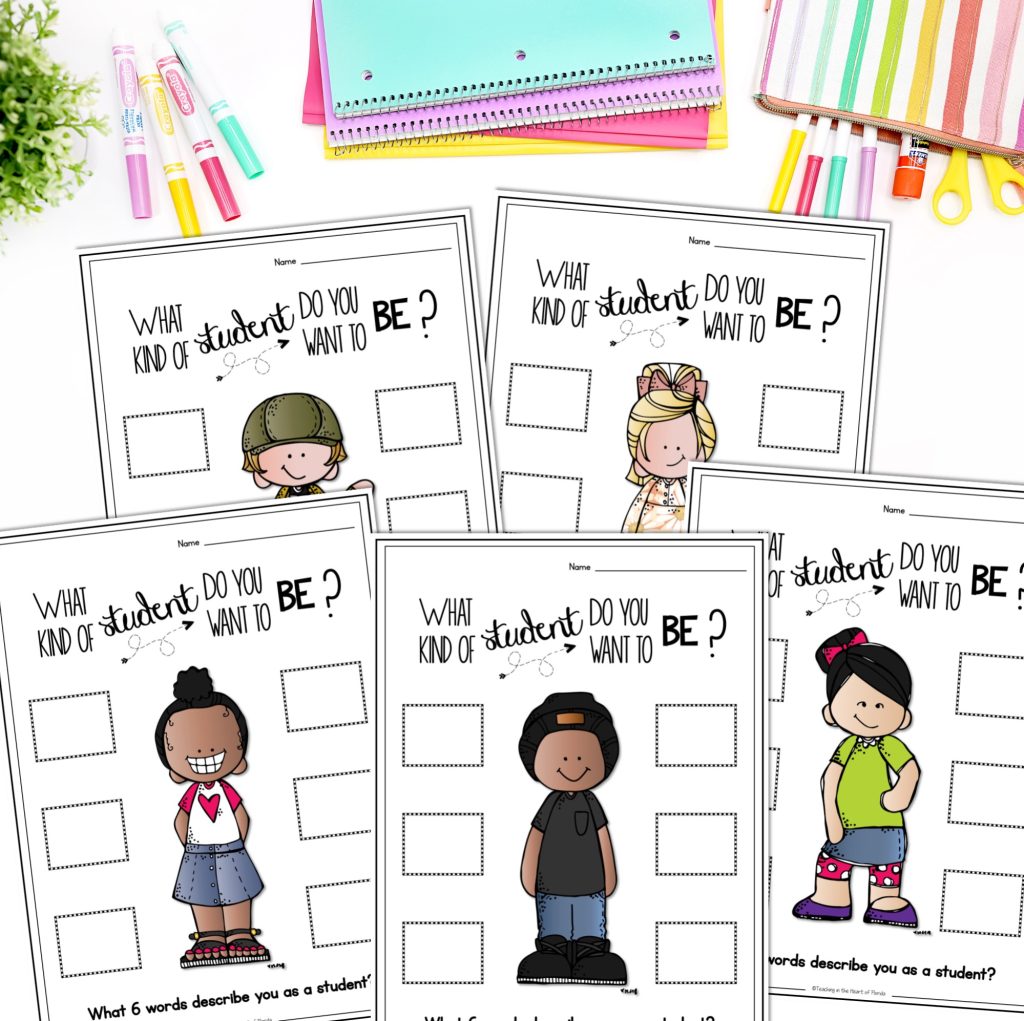
There are eight different versions so that each child can find someone who looks similar to them. There is also a black & white version.
Effective Goals are SMART
You might have heard about SMART goals in various contexts, but do you know what the acronym means? Before you can successfully help students set goals, you should know and understand the structure for it.
- S – Specific
- M – Measurable
- A – Attainable
- R – Relevant
- T – Timely
Set SMART Goals That Are SPECIFIC
Goals have to be very specific. For students, that means simple and straightforward.
- I want to increase my reading score by 5 points.
- I want to be able to read 80 words per minute.
- I want to be able to say my multiplication facts to 10 with 2 or fewer errors.
Set SMART Goals That Are MEASURABLE
Goals must be able to be measured. The sample goals I listed above can be measured. Here are a few non-examples:
- I want to be a better reader.
- I want to be good at math.
These goals are typical of how children perceive learning. They know they want to be “better” at something because they’ve heard that type of language about it. However, those goals cannot be measured.
In this example, this goal is measurable. It can be measured by a score received on a reading test. It’s also a goal that could be applied to different students regardless of their current performance.
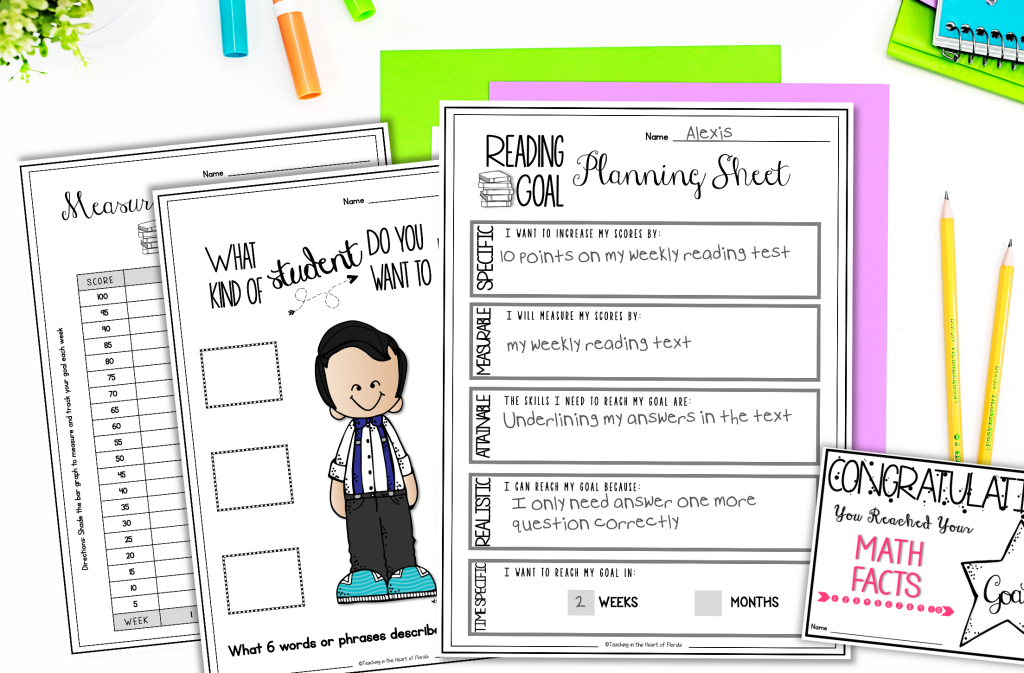
This goal is a great example of a beginning goal for a reader. Alexis is striving to improve her weekly reading score by 10 points. It’s specific and measurable. She included a strategy for how she will achieve her goal: Underline my answers in the text. Her goal is set for a 2 week time period.
Set SMART Goals That Are ATTAINABLE
A student who consistently scores 70% on a reading comprehension test should not set a goal of attaining 100%. Going from 70% to 100% is a pretty BIG goal and might not be attainable in a short period of time. The goal of improving their score to 75% or 80% is much better for a student.
Students need small attainable goals when they start goal setting. Otherwise, they will experience failure over and over. This defeats the purpose of goals.
This is also why teachers must be part of the goal-setting process with their students.
Set SMART Goals That Are REALISTIC
A SMART goal is realistic if you have a plan for HOW the student can achieve it. For example, if a student wants to set a goal of reading 80 words per minute and they are currently reading at 70 words per minute – what steps or strategy would you suggest they take to reach that goal?
If you suggest that the student read aloud to their parent every night for 15 – 30 minutes over a 2-week period. Or, you taught them a new word decoding strategy to practice other than sounding out the words. They could probably reach their goal of improving by just 10 words.
This step is important. A goal without a plan is probably not going to be reached.
In the example above, the strategy is for the student to underline the answers in the text during a test. This gives her a realistic way of working toward her goal.
Set SMART Goals That Are TIME SPECIFIC
My experience with goal setting is that the younger the student, the shorter the time span of the goal. This would also apply to students who are new to goal setting. In order for them to want to set goals, they need to see outcomes pretty quickly.
For the goal example above of improving fluency, I would set a time frame of just 2 weeks. If the student achieves that goal, set another one that is a little harder. If they don’t, help them with a new strategy and check again in 2 weeks.
Why should you set goals with your students?
Goal setting helps our students become the students they want to be! It gives them agency into their own learning. We now know that intelligence can be learned – it’s not something some people have or don’t have.
Other benefits of teaching students how to set goals:
- Builds self-confidence
- Creates self-awareness of strengths and weaknesses
- It helps them visualize their possibilities.

Teaching students how to set SMART goals that make an impact on their learning will transform the way you encourage and motivate your students! The impact is not just in the improved scores or performance – it creates a sense of possibility for students that will help them in all areas of school and personnel growth. When they experience success, it motivates them to strive harder and increase their learning exponentially!
Want to try goal setting with your students? This free sample can get you started!
Grab this FREE Goal Setting Resource!

Want to read more about setting SMART goals?
- Using Accelerated Reader Goal-Setting Charts to Motivate Your Students This Year
- Goal Setting: Empower Students to Own Their Learning
The most valuable resource that all teachers have is each other. Without collaboration our growth is limited to our own perspectives.
Robert John Meehan


Interested in signing up for my email?
Just Click!
• Get valuable resources and teaching tips delivered straight to your inbox
• Exclusive deals and discounts only available to email list subscribers
• Be the first to know about new products and launches
• Share your ideas and feedback with me directly, I love hearing from my readers!

Interested in signing up for my email list?
It’s Easy!
• Get valuable resources and teaching tips delivered straight to your inbox
• Exclusive deals and discounts only available to email list subscribers
• be the first to know about new products and launches
• Share your ideas and feedback with me directly, I love hearing from my readers!