


Earth Day falls on Wednesday, April 22nd, but if you ask most elementary teachers, one day is never enough. Between science connections, reading tie-ins, and the genuine excitement kids bring to environmental topics, Earth Day practically begs to become a full week of learning. The good news is that you do not have to scramble to pull it together. With the right Earth Day activities for elementary students in your toolkit, you can build a week that feels intentional, engaging, and dare we say, fun for you too. 🌎
Table of Contents
Here is a day-by-day plan designed specifically for grades 3 through 5 that keeps the learning real, the kids moving, and your sanity intact. ⬇️
Why Plan a Full Week of Earth Day Activities for Elementary Students?
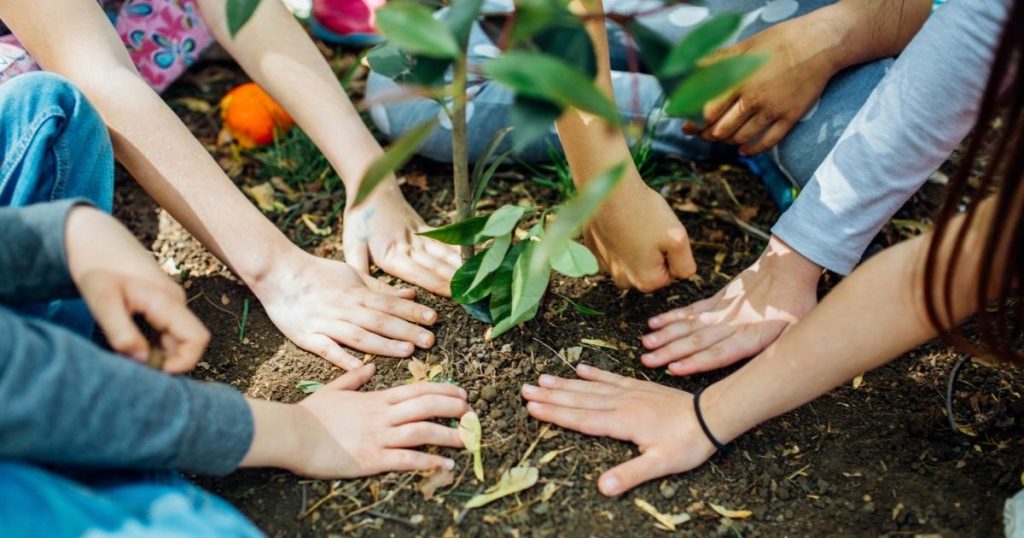
A single Earth Day lesson can feel rushed or disconnected. But when you build a full week of learning around April 22nd, something different happens. Students start making connections between subjects. They carry the conversation home. They come back the next morning actually curious about what comes next.
A week-long structure also lets you hit multiple standards naturally, weaving in science concepts, reading skills, and critical thinking without forcing anything. Every activity below is designed with that in mind.
A Note on Morning Work and Fast Finishers
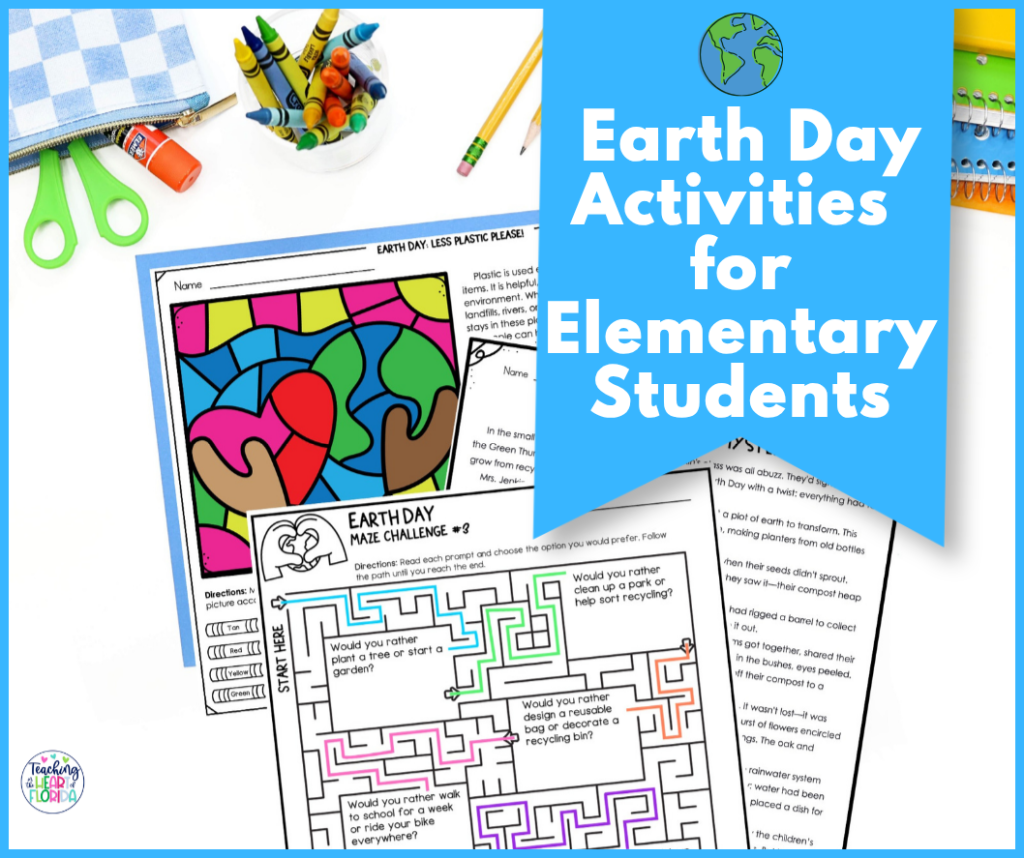
Before diving into the daily plan, it helps to know that two types of activities can anchor your week from the very first morning: color by code and mazes.
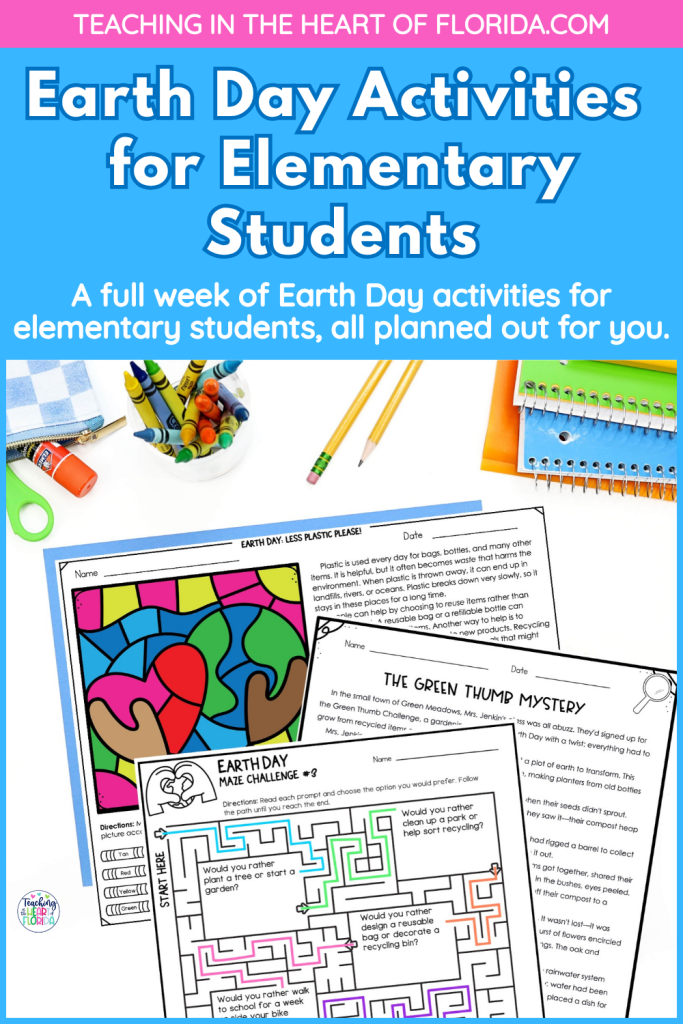
There are three Earth Day color by code activities, each covering a different environmental theme. Renewable Energy Rocks focuses on clean energy sources. Let’s Grow Something Good ties into tree planting and reforestation. Less Plastic Please tackles single-use plastics and ocean health. Each one gives students a meaningful content review while they settle in for the day.
The three mazes offer something a little different. One is built around short answer questions, one uses multiple choice, and one features Would You Rather prompts that spark quick conversations about environmental choices. These work beautifully as morning work on any day of the week, and they are also perfect for early finishers who need something purposeful to move into without interrupting the flow of your lesson. Rotate these throughout the week based on what fits your pacing. There is no wrong way to use them.
Monday: Launch the Reading Escape Room
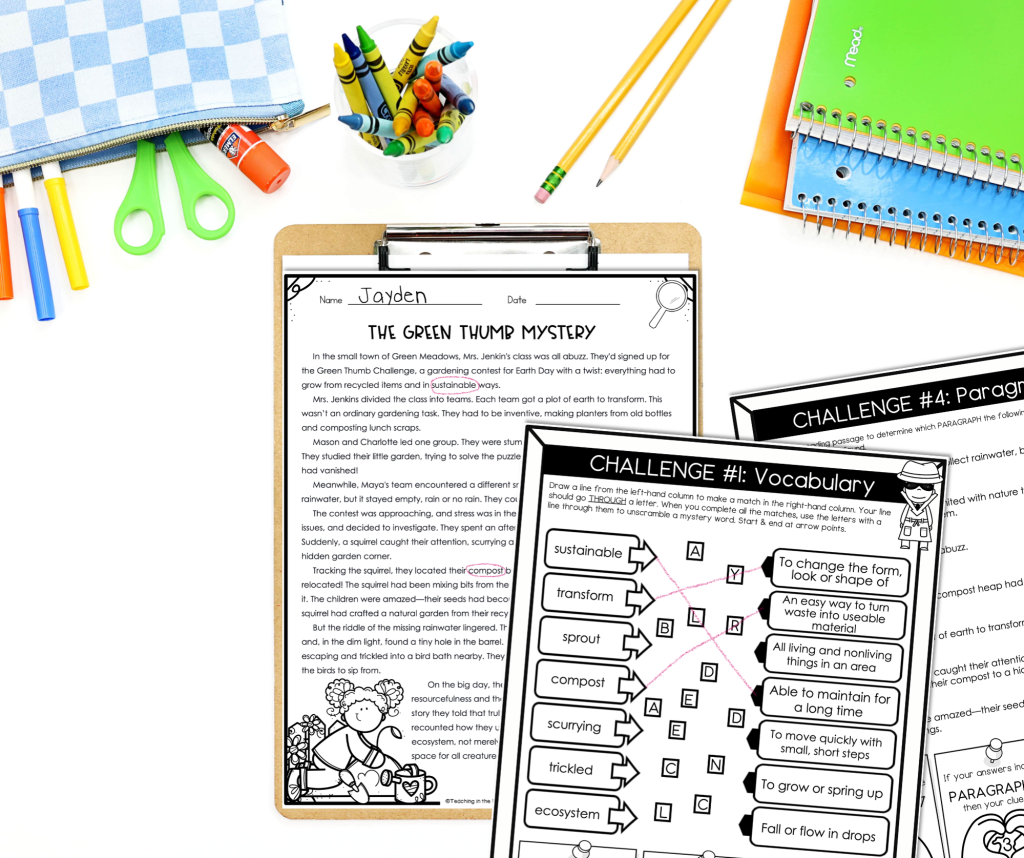
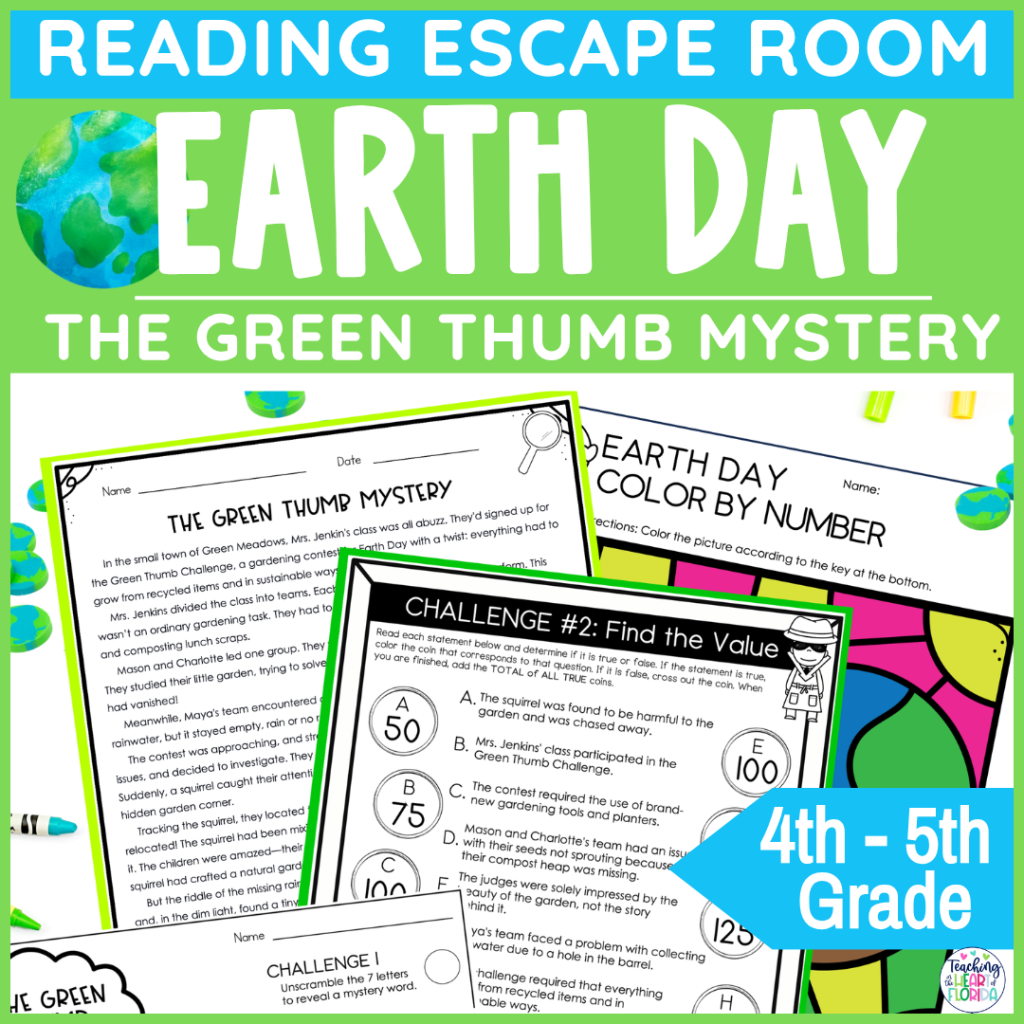
There is no better way to open Earth Day week than by getting students working together around a shared challenge. On Monday, introduce the Earth Day escape room and let partners dig into the first one or two challenges.
The escape room has four challenges total, which makes it a natural two-day activity. Spreading it across Monday and Tuesday gives partners enough time to work through each challenge carefully rather than rushing. The built-in problem-solving structure means students are actively applying environmental content knowledge, not just reading about it.
When you introduce it on Monday, take a few minutes to set expectations for partner communication. Students who know how to talk through disagreements and divide tasks tend to get a lot more out of collaborative challenges like this one. A quick anchor chart on what good partnership looks like can go a long way.
Tuesday: Finish Strong with the Escape Room
Tuesday is all about wrapping up the final two challenges and sticking the landing. As partners work toward solving the last clues, the energy in the room tends to build naturally. That sense of momentum is worth leaning into.
After partners finish, build in a short debrief. Ask a few pairs to share a challenge that made them think hard or a moment where they disagreed and had to work it out. That reflection is where a lot of the real learning consolidates, and it sets up a nice transition into Earth Day itself on Wednesday.
While groups finish at different paces, mazes and color by codes make ideal early finisher options to keep everyone productively engaged without the pressure of rushing partners who are still working.
Wednesday: Celebrate Earth Day with a Scavenger Hunt
You made it to April 22nd! Today should feel like a celebration, and nothing captures that energy better than getting the whole class up and moving.
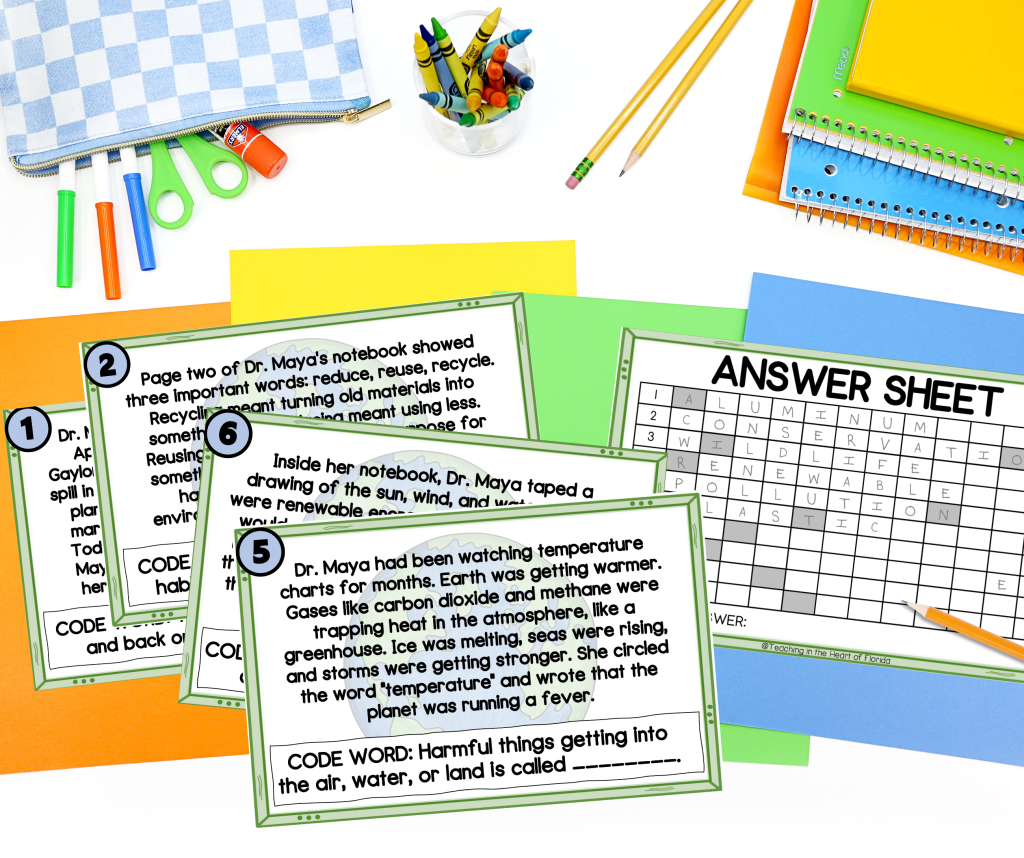
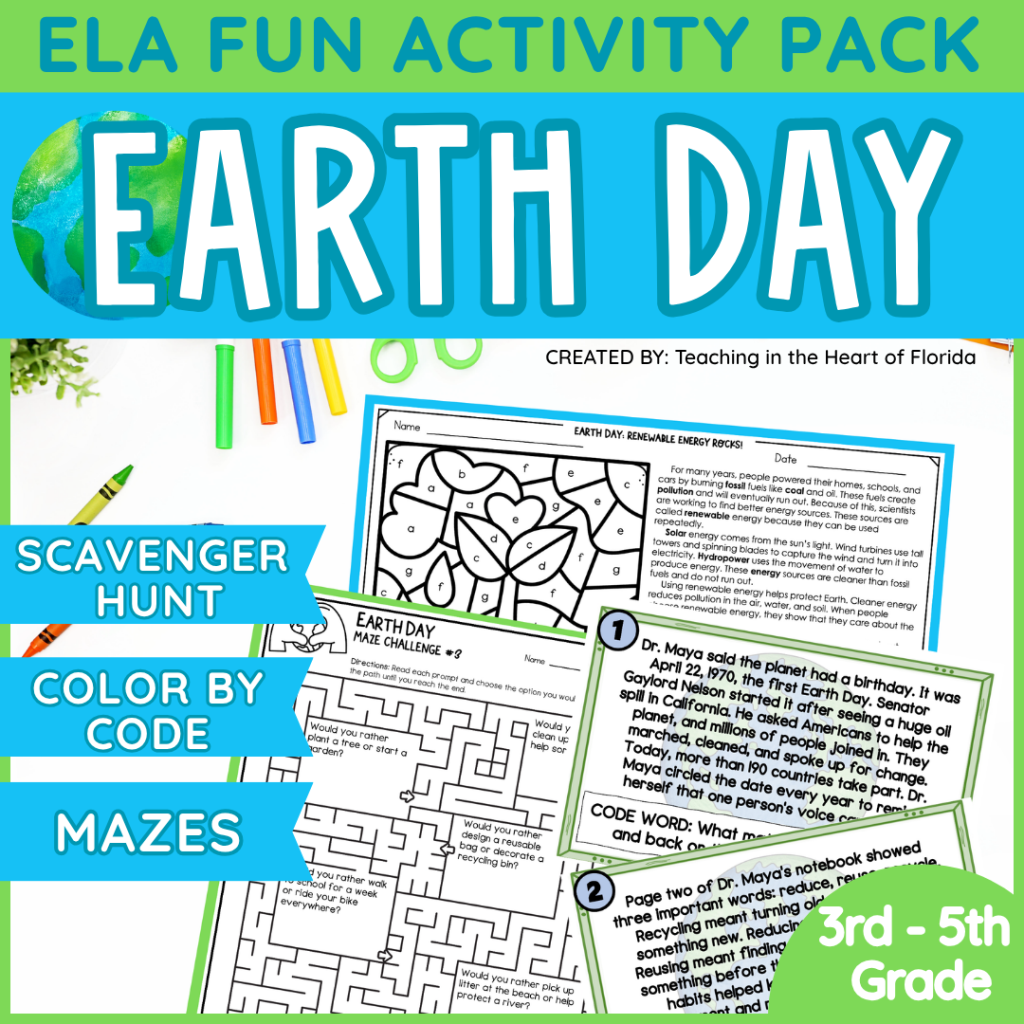
The Earth Day scavenger hunt is designed for exactly this kind of day. Students move through a series of clues tied to environmental concepts, but there is a twist that takes it a step further. Along the way, they are also solving a code and unscrambling a secret word. That extra layer of puzzle-solving keeps the challenge alive all the way to the end and gives students a satisfying payoff when they crack it.
A few tips for running it smoothly:
- Review transition expectations before you start
- Use a consistent signal students know to freeze and listen
- Make sure each student has the answer sheets to record their answers
The scavenger hunt works well as a full morning block or a longer afternoon stretch. Either way, it is the kind of Earth Day memory students will still be talking about a week later.
Thursday: Go Deep with Small Group Reading
After two high-energy days, Thursday is the right moment to slow down and go deeper. Small group close reading lets you differentiate naturally while keeping everyone anchored to the same Earth Day themes the class has been exploring all week.
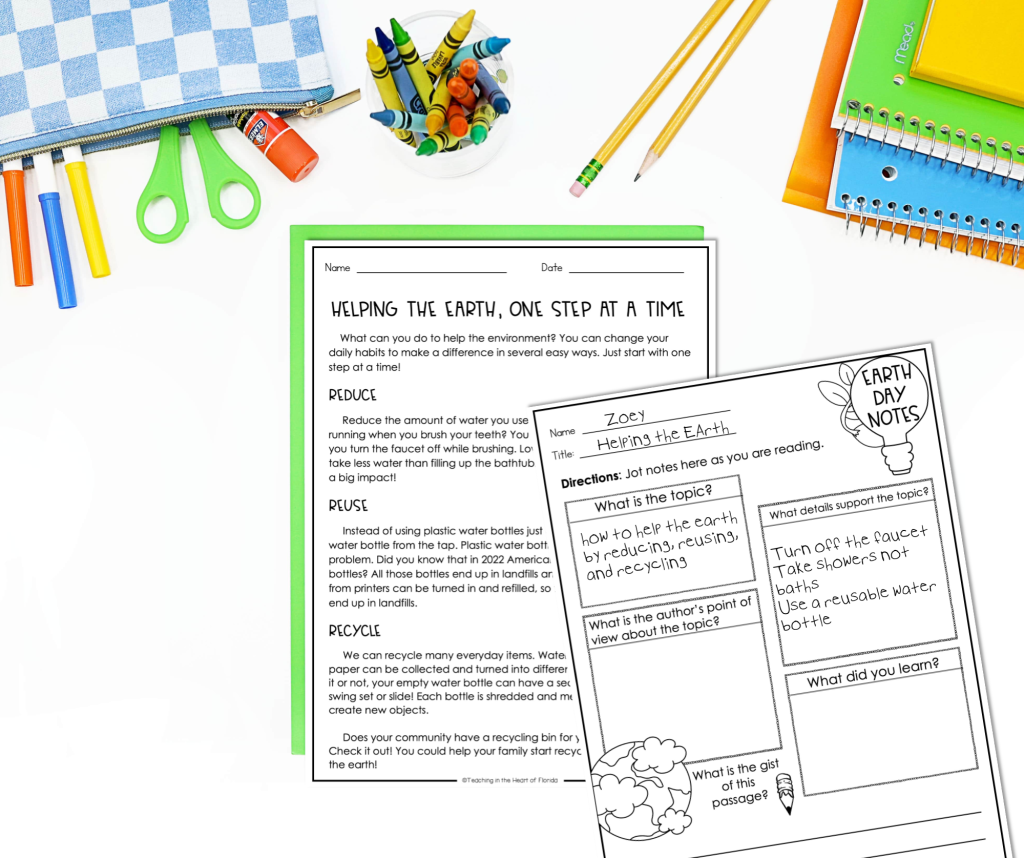
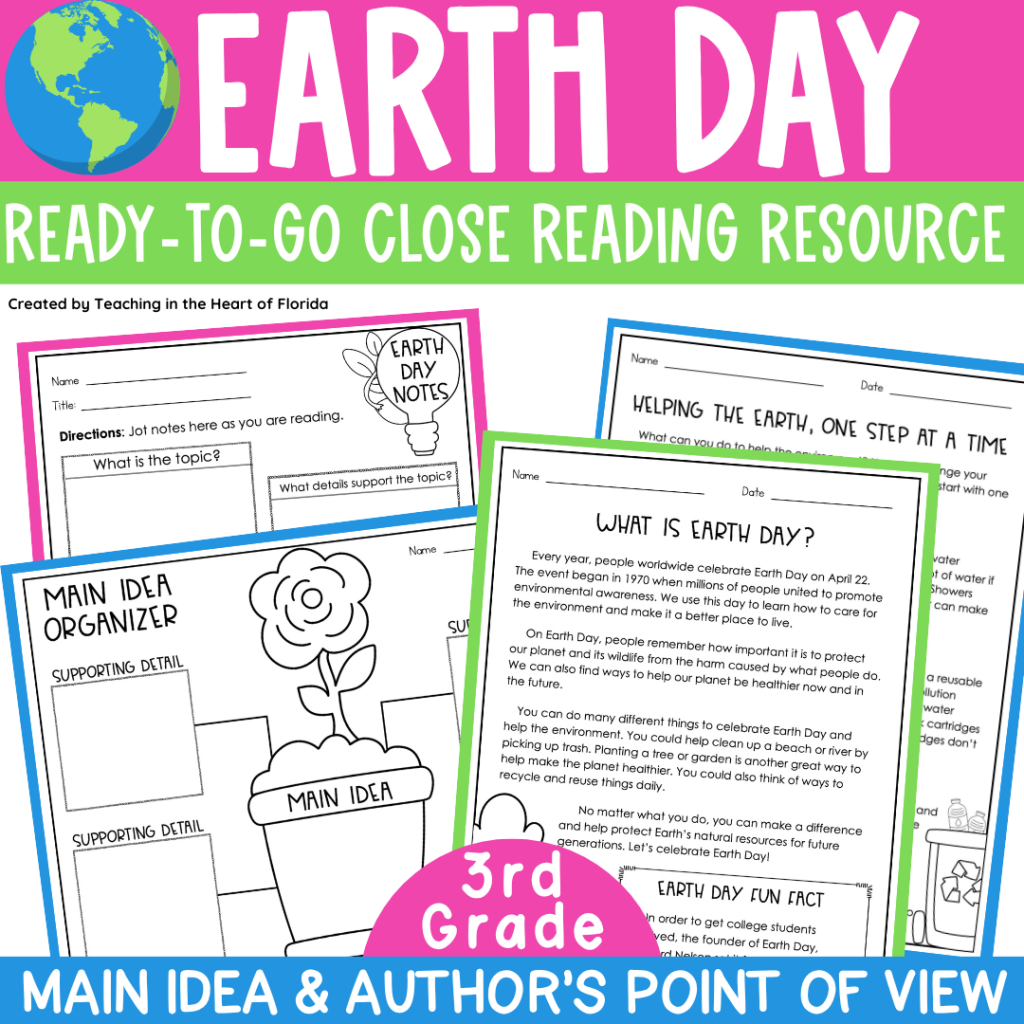
A close reading pack focused on Earth Day content gives you structured passages and text-dependent questions that push students to read carefully, cite evidence, and think critically. Students are not just consuming facts here. They are practicing the close reading skills that transfer across every subject, anchored in content they actually care about right now. Use your time at the small group table to target the specific skills your readers need most. The shared Earth Day context gives you a common entry point even across different reading levels, which makes differentiation feel seamless rather than obvious to students.
Color by codes and mazes continue to work well as morning work and early finisher options today, keeping the Earth Day thread going throughout the day even outside your reading block.
Grab This FREE Reading Resource!

Friday: Bring It All Together
Friday is the moment to let students look back at the full week and make meaning of everything they explored. This does not have to be elaborate. A whole-class discussion, a short reflection write, or a partner share-out where Monday’s escape room pairs reconnect and talk about what stood out most can be just as powerful as a formal assessment.
Consider closing with a simple action step. Research on environmental education consistently shows that students who leave with a sense of agency, not just awareness, carry the learning further. A pledge, a letter, or one concrete habit they commit to trying is a meaningful way to close out the week.
If you have any color by codes or mazes students have not gotten to yet, Friday morning work is a natural spot to finish them off before the week wraps up.
Frequently Asked Questions
Do I have to follow the day-by-day plan exactly?
Not at all. The weekly plan is a starting point, not a script. If your class needs an extra day on the escape room or you want to flip Wednesday and Thursday, go for it. Use what fits your schedule and your students.
How much prep time do these activities require?
It’s all print-and-go. The scavenger hunt takes about 10 to 15 minutes to set up stations, but everything else is ready to use right off the printer.
What if some partners finish the escape room faster than others?
The color by code activities and mazes are perfect for this. Fast finishers can move right into one while other pairs are still working, so no one is sitting around waiting and no one feels rushed.
A Few Tips for the Week
Tie everything together with a running vocabulary wall. Add two or three Earth Day terms each day and refer back to them often. By Friday, students will have a shared language that makes discussion noticeably richer.
Do not stress about hitting every subject perfectly every day. The activities above naturally touch science, reading, and social studies. Trust the connections and let students make a few of their own.
If you are also looking for ways to make Earth Day itself feel special beyond structured lessons, I have a whole post on Earth Day classroom activities that make the day meaningful for students, including read alouds, hands-on projects, and a free close reading resource worth grabbing.
Finally, take photos. Earth Day week tends to produce some of the best classroom moments of the year, and your future self will thank you when it comes time to share with families or plan for next April.
Ready to Plan Your Earth Day Week?
Earth Day does not have to sneak up on you or feel like extra work piled onto an already full April. With a clear plan and activities that serve real instructional purposes, you can make the week something students talk about long after April 22nd is over.
The resources mentioned throughout this post for Earth Day cover every part of your classroom day, from the morning bell to your last small group. Grab what fits your class best and make Earth Day week your own.
More Earth Day Resources
- Earth Day Activities for Upper Elementary
- Earth Day Reading: Exploring Author’s Point of View
- Earth Day Reading Comprehension: Main Idea

Hi there! 👋
I’m a former upper elementary teacher and now a full-time curriculum creator. I design no-fluff, high-impact resources for 3rd–5th grade teachers who want to save time and feel confident in what they’re teaching. I’ve spent years creating reading, math, and social studies lessons that are meaningful, manageable, and ready when you need them most.